

The IPL 2026 Rush: Why 90% of New Sportsbooks Crash During Playoffs
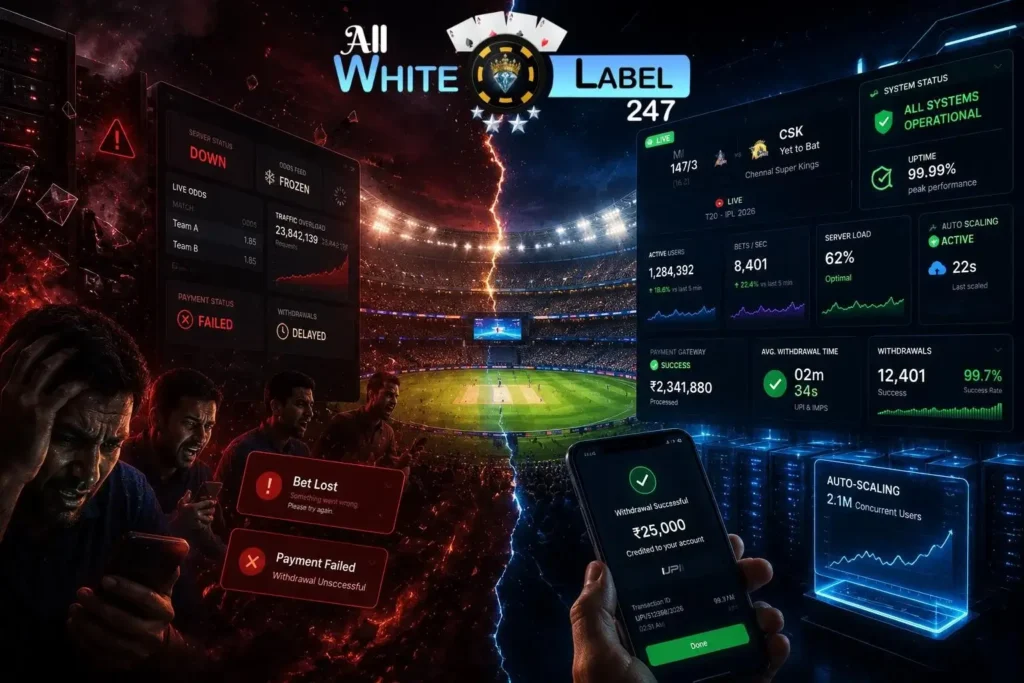
For: Sportsbook Founders, Gaming CEOs & Betting Platform Operators Introduction: The Night Everything Broke It is 9:47 PM. Mumbai Indians need 18 runs off the last over. Your sportsbook just crossed 800,000 active users. The in-play market is moving every 3 seconds. Then your server times out. Odds freeze at old numbers. Users hammer the refresh button. Withdrawal requests pile up. Customer support gets buried. And somewhere at exactly the wrong moment, your platform goes dark. This is not a hypothetical. This is what happens to roughly 9 out of 10 new sportsbooks when IPL playoff traffic hits at full force. IPL 2026 is already shaping up to be the biggest betting season in South Asian history. We are talking about 3.2 million concurrent users during peak playoff moments. Live betting markets moving on every single ball. UPI transactions firing every millisecond. And data flowing at speeds most new platforms were simply never designed to handle. Here is the uncomfortable truth: most sportsbook founders think they are ready. They have done the math. They have stress-tested their servers. They have spoken to their tech team. But IPL traffic does not behave like ordinary traffic. It does not build gradually. It explodes. This blog breaks down exactly why that happens, what it costs you when it does, and how white-label infrastructure from AllWhiteLabel247 is built to survive and thrive under that pressure. The 3 Ways IPL 2026 Breaks New Sportsbooks The Traffic Tsunami: Your Servers Were Not Built for This Picture your typical traffic curve. It builds through the day. Peaks in the evening. Falls off after midnight. Predictable. Manageable. IPL does not work like that. When a 200-plus run chase goes down to the wire, like we saw in IPL 2025 playoff finals, traffic does not build. It detonates. In documented infrastructure case studies from comparable cricket markets, platforms have recorded spikes from 120,000 to over 1.9 million concurrent users in under six minutes. Most new sportsbooks are provisioned for peak. Not for peak-times-ten. Here is what happens when your servers can not keep up: Page load times go from 1.2 seconds to 14 seconds. Session drops accelerate. Users exit after 8 seconds of lag. Live bet submission failures begin registering above 12%. Customer trust evaporates instantly and it does not come back. The worst part? You do not always know you are failing. Your monitoring dashboard might still show green. But your users are already on a competitor’s app. Odds Latency: The Invisible Revenue Killer Live betting is the heartbeat of IPL wagering. Every ball matters. A wide. A six. A wicket. The odds shift in real time and your platform has to shift with them. If your odds engine has even 200 milliseconds of latency, professional bettors exploit it. They see value before your platform corrects itself. You take losses on every single event. Repeatedly. Across thousands of markets. Across the entire tournament. If your odds latency goes above 500 milliseconds, which is shockingly common under high load? your entire live market becomes a liability instead of a revenue source. The benchmark you need to be at: sub-100ms odds delivery, every ball, under full tournament load. Anything slower is leaving money on the table or handing it directly to arbitrage bettors. Payment Gridlock: The Problem That Costs You Everything Indian bettors expect fast deposits and same-day withdrawals. That is the market reality in 2026. UPI has made instant payments the standard. Your platform is expected to match that. But under IPL playoff load, payment infrastructure buckles before server infrastructure does. Here is why: UPI gateway APIs have rate limits and most platforms hit them. Multiple payment processors competing for the same API slots create queue backlogs. Withdrawal requests spike 340% in the final overs of a close match. If a withdrawal takes more than 4 hours, you get chargebacks, disputes, and social media blowback. One viral post about “withdrawal stuck for 2 days” during IPL playoffs can destroy six months of brand-building overnight. The platforms that survive IPL are the ones that have multi-gateway UPI routing automatically switching between providers when one hits capacity. Most new sportsbooks have one gateway. One point of failure. Build vs. Buy: The $300,000 Mistake Every founder considers building in-house. It feels like control. It feels like ownership. But after you sit down and actually add up the numbers, the picture changes fast. Here is an honest comparison of what it actually costs and takes: Factor In-House Build AllWhiteLabel247 Initial Cost $200,000 – $400,000+ Fraction of build cost Time to Launch 12 – 18 months 30 days or less Core Team Needed 15+ engineers 0 (fully managed) Infrastructure Risk Very high Near zero Compliance Framework Build from scratch Pre-certified (GLI) Payment Integration Custom API build Multi-gateway, live day 1 Odds Engine Build + calibrate Sub-100ms, pre-deployed Auto-Scaling Manual config + DevOps Automatic, server less IPL Load Ready Unlikely without 6 months prep Proven at 2.1M+ concurrent Maintenance Overhead Ongoing high cost Fully managed by AWL247 The $300,000 mistake is not just the money. It is the time. It is the missed IPL window. It is the team you had to hire and fire. It is the users you lost while your engineers were still debugging payment web hooks at 2 AM. The smart operators figured this out early. They stopped trying to build the infrastructure. They started focusing on what actually grows a sportsbook marketing, acquisition, retention and brand. And they let AllWhiteLabel247 handle the engine underneath. How AllWhiteLabel247 Is Built for IPL Scale This is not marketing language. This is engineering reality. Every component of the AllWhiteLabel247 platform was stress-tested against IPL-scale scenarios. Not theoretical scenarios. Actual simulated playoff traffic → from 100,000 concurrent users to 2.1 million → in controlled load environments. Here is what that looks like under the hood: Auto-Scaling Cloud Infrastructure The platform deploys on cloud architecture that detects traffic spikes and provisions new capacity automatically in under 30 seconds. No manual